
Authenticity, Panic, Personal History, and Originality (not to mention intellectual property)
(TLDR: I don’t do exact replicas of other artists’ work, and I’ll tell you if an AI design is physically impossible for your skin. Between my background in graphic design and my neurospicy brain (hello, justice sensitivity), copying feels like a "system error" that kills my creative spark. I’m here to use your Pinterest boards as inspiration to build a custom, one-of-a-kind piece that actually works with your anatomy and lasts a lifetime. The only exceptions? Memorials, logos you own, and public domain icons. Let’s keep it original.)
My spicy li’l mind has been a bit boggled lately. Until it hits me that my thought patterns differ from other humans, I get stuck in an endless thought experiment. Now that I’ve recognized that disconnect, I’m offering clarity on my preference to not copy artwork and the why behind my stance.
Creating art has formed me into who I am today. I want the work I put on your body to be as personal, intentional, and unique as you are. I am not the art police, but I have personal policies that protect the integrity of your story and my craft.
Don’t Ask Me to Copy Artwork. Please?
While there are rare exceptions, the distinction between reference and replication is vital to my ethics. Your tattoo should be as unique as your story. I respect other artists’ work too much to steal it, and I respect your individuality too much to give you something a hundred folks in 10 miles have.
Copyright & Intellectual Property (IP)
IP refers to "creations of the mind." In the tattooing world, a custom design belongs to the artist who drew it and the client who commissioned that vision. With my background in graphic design, I cannot ignore the labor of original creators. My history with IP attorneys and professional design taught me that using someone else's design without permission isn't just a style choice; it is a legal and ethical violation.
I view exact replication as a direct violation of another artist's labor. I protect their work so the custom art I build for you remains yours alone. The recent Kat Von D lawsuit (Sedlik v. Von D) serves as a wake-up call that even "referencing" a photo can have major legal implications. I want the ink in your skin to be ethically sound and legally clear.
The Spicy Brain Factor
I have more than a touch of the neurospicy. While my brain fuels my art, it also comes with rigid internal coding. When I’m asked to replicate work, it creates intense internal friction and a total system meltdown. This shows up in two ways:
Justice Sensitivity:
This is a deep moral "itch" that happens when intellectual property is disrespected. It feels physically wrong. Beyond the internal "yuck," asking me to duplicate another person's art feels disrespectful to the lifetime I have spent cultivating my own skills. I haven't spent my career honing my craft just to act as a human photocopier. It is also disrespectful to the original artist. Asking to bypass their labor is like swiping a book from a bookstore, slapping a post-it on it, and saying your bestie wrote it for you. It’s theft.
The Death of Interest:
Replicating is "busy work" that kills the spark I want to bring to your skin. I lived that life in graphic design and I am done with it. If the work isn't authentic, my brain simply cannot engage. I want to be fully present and excited when I’m tattooing you, and that excitement only lives in the transition from a blank page to a new creation.
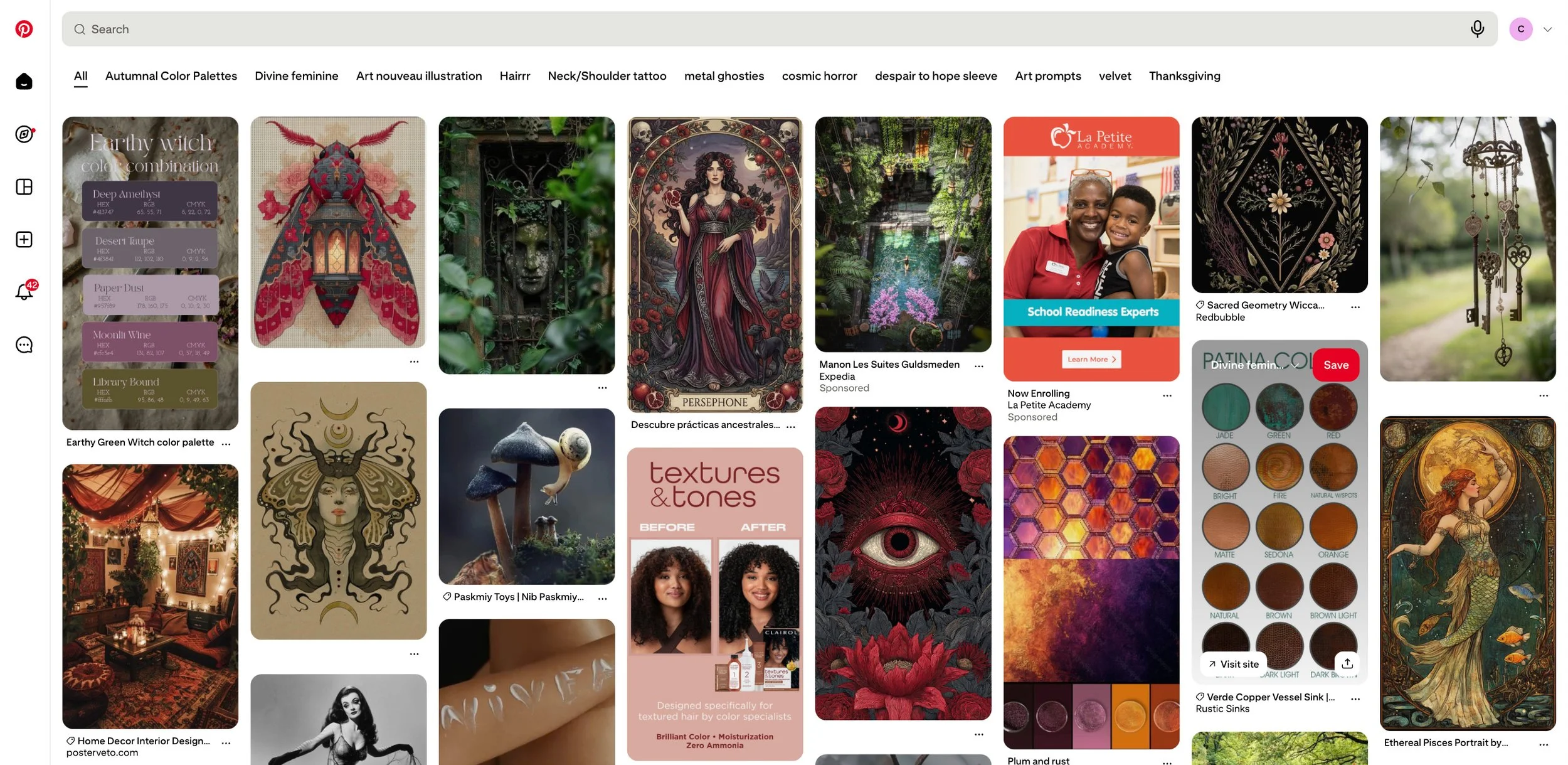
Pinterest: Mood Boards vs. The "Pinterest Trap"
Pinterest is a tool I encourage clients to use as a reference rather than a catalog.
Mood Boards: These are helpful for idea generation. When you send a collection of images to show specific textures, shapes, or color palettes, you provide the building blocks for a custom piece. This allows us to establish a visual direction before I ever pick up a pencil.
The Pinterest Trap: The issue arises when a client selects a single image of a completed tattoo and requests an exact replica. This stops my creative process. A design created for someone else's body is not a template for your own.
The Pivot: I take the elements you like from your references and redraw them from scratch. This ensures you get the aesthetic you want while maintaining the integrity of an original tattoo.
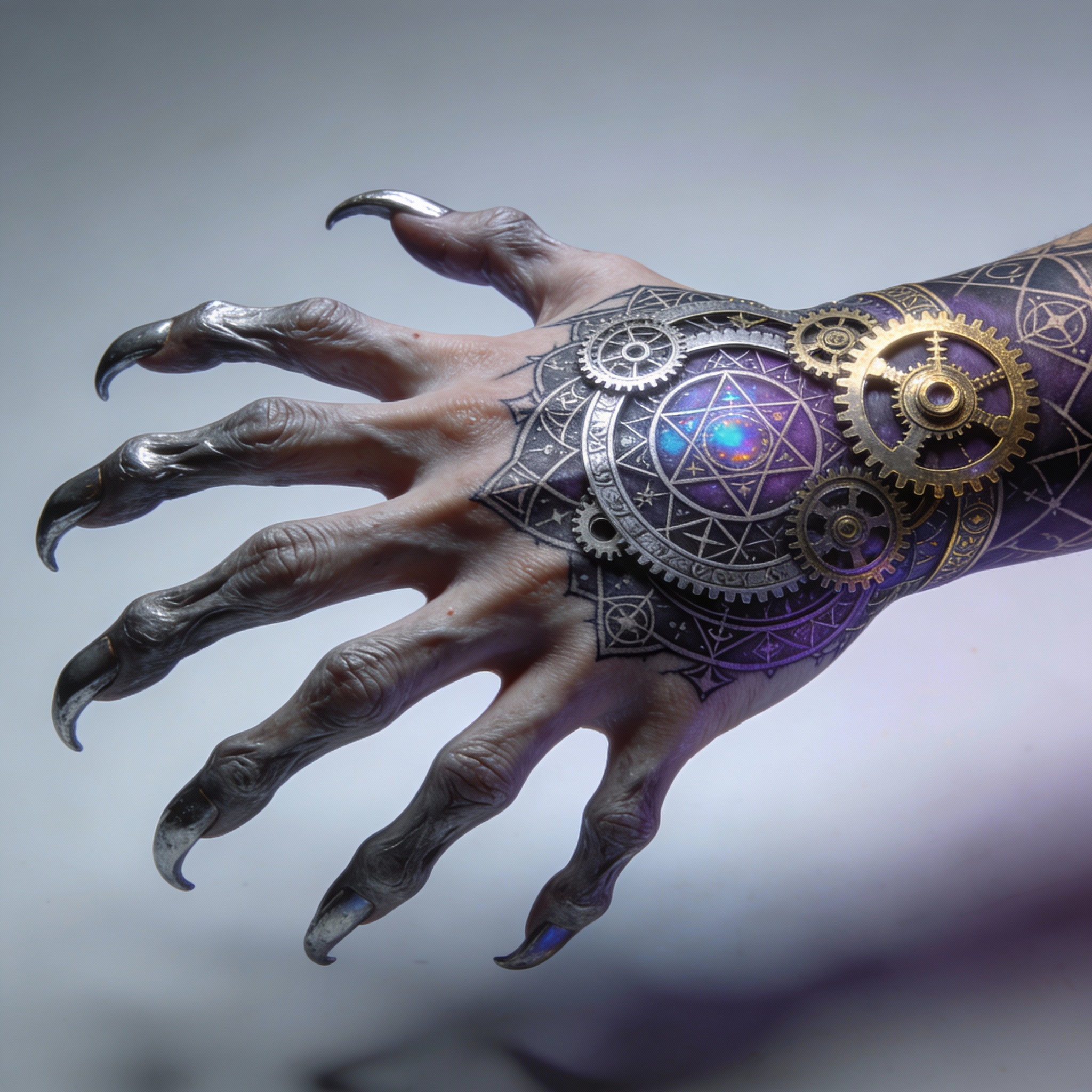
The Reality Check: AI & Skin Physics
Just because a design looks good on a screen does not mean it is functional on skin. While AI can be used for idea generation, it ignores the physical limitations of tattooing. If you send a design that appears to be AI-generated, I will let you know. Digital renders often ignore the laws of anatomy and how ink behaves in tissue. AI does not understand:
Ink Spread: Lines blur and move as they age.
Longevity: Many hyper-detailed digital images are physically impossible to execute at a size that will remain legible years later.
The Exceptions (The "Nuance" Section)
Sometimes the tribute is the point. In those cases, I prioritize honoring the specific reference over creating something new. I make exceptions for:
Memorials: Loved one’s handwriting, a specific doodle, or a design from an heirloom or urn. These deserve to be preserved exactly as they are.
Logos: If you own the rights to a brand or organization.
Public Domain and Iconography: Common symbols or pop culture icons that rely on a recognizable visual language.
A Note on Flash
The tattoo industry has a long history of flash designs built to be shared, such as American Traditional styles. I respect that history and work within it when the style calls for it. However, I prefer to treat my own flash designs as one-offs so the design remains exclusive to you. Many artists are comfortable with repetition, but that is not how I work. To each their own.
A Space to Honor the Spice
I built Reclamation Tattoo on a foundation of respect for divergent neurological operating systems (including my own). When I talk about justice sensitivity, it isn't about being difficult. It is about protecting the energy of the studio. Clarity and boundaries go a long way in making me feel comfortable in my environment. When my brain is at peace, I can pass that same level of safety and focus along to you.
Art, Love, and a Little Magic
Tattooing is a collaboration requiring trust from the client and integrity from the artist. I am committed to this craft and to the people who walk through my door. By starting from a place of mutual respect for original work, we create the space for something truly meaningful to happen. Thank you for trusting me with your skin and your stories.
Text 720-441-2928 or DM to book your session.