
Unapologetically Unmasked
For most of my life, I thought my face was doing something wrong. I've been told to "fix my face." I've been told I need to adjust my "resting bitch face" with customers. I've been told I didn't "smile right," and that I need to be careful of my expressions because our meetings are recorded. All of this confused me for a long time, because I didn't realize other people weren't fighting their own expressions the way I was. I was just being still. My face at rest looks like this: flat, direct, paying close attention.
This is what engagement actually looks like on me. But it isn't only engagement. My face shows what I actually feel. Sometimes that meant I looked locked in and steady because I was locked in and steady. Other times it meant I wasn't going to fake being fine with someone else's chicanery that was legitimately pissing me off. Either way, it deviated from whatever norm was expected of me, and I spent years thinking that deviation was the problem.
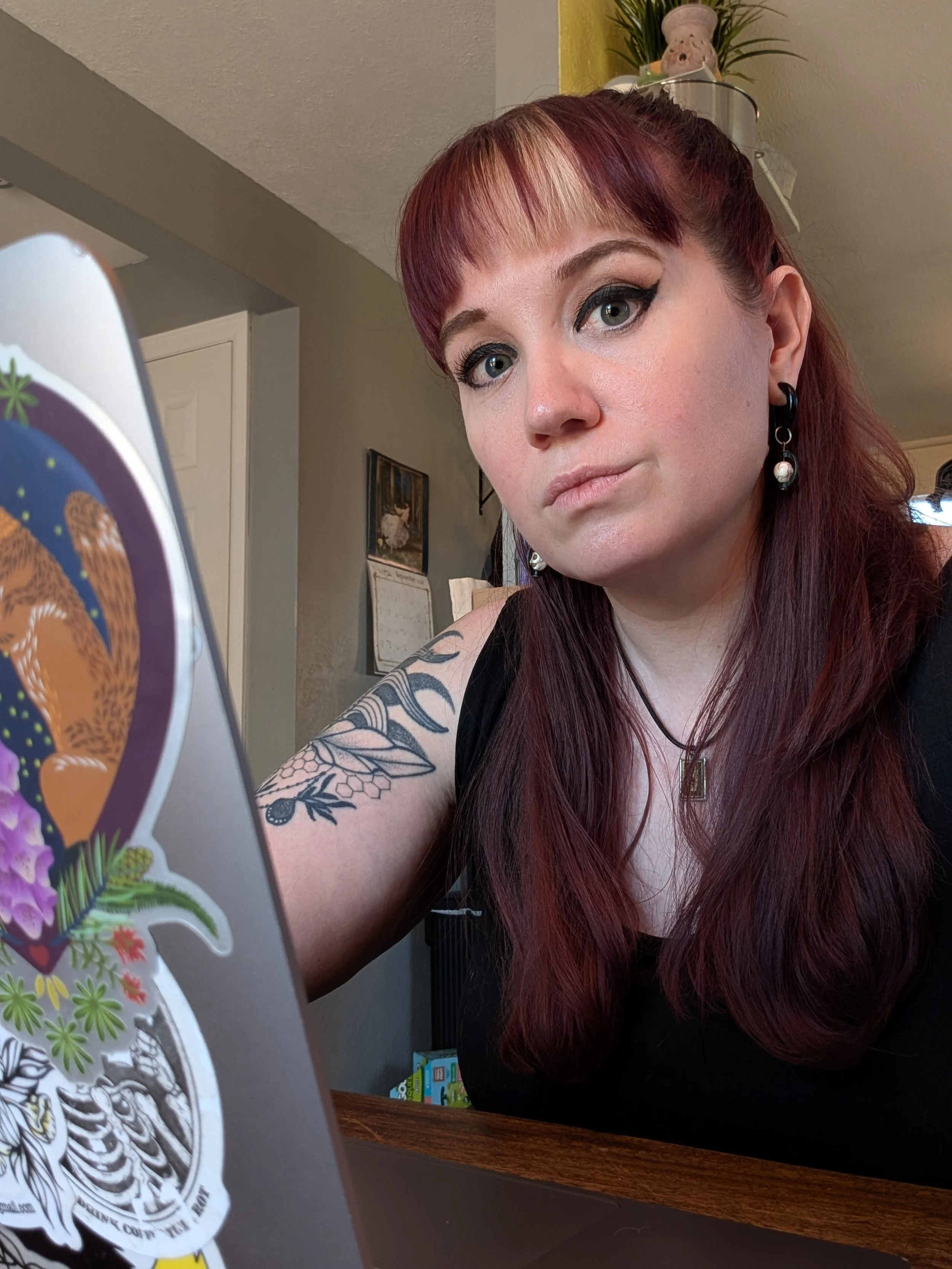
I got diagnosed with AuDHD as an adult, after decades of learning to perform the version of a face that other people expected. I smiled more than I felt like smiling. I widened my eyes when I wanted to look interested. I built an entire second face out of other people's comfort, and I wore it so long that I forgot it wasn't mine.
The photo on this post is my real face. Yes, I wear makeup to feel like the version of me that is the most comfortable to wear. But this is me, not posed, not masked, not doing anything for anyone watching. This is what I actually look like when I am fully present and fully engaged. If that reads as flat to you, that says more about what you were trained to expect from a woman's face than it does about what is happening in mine.
The Shop I Had To Build
This shop exists because I could not find a chair that worked for a body and a brain like mine, so I built one. This is a shop built for low sensory input, with no forced small talk and no assumption that eye contact equals respect. I built the shop I needed, and it turned out a lot of other neurodivergent people, queer people, and people who don't fit the mold needed the exact same thing.
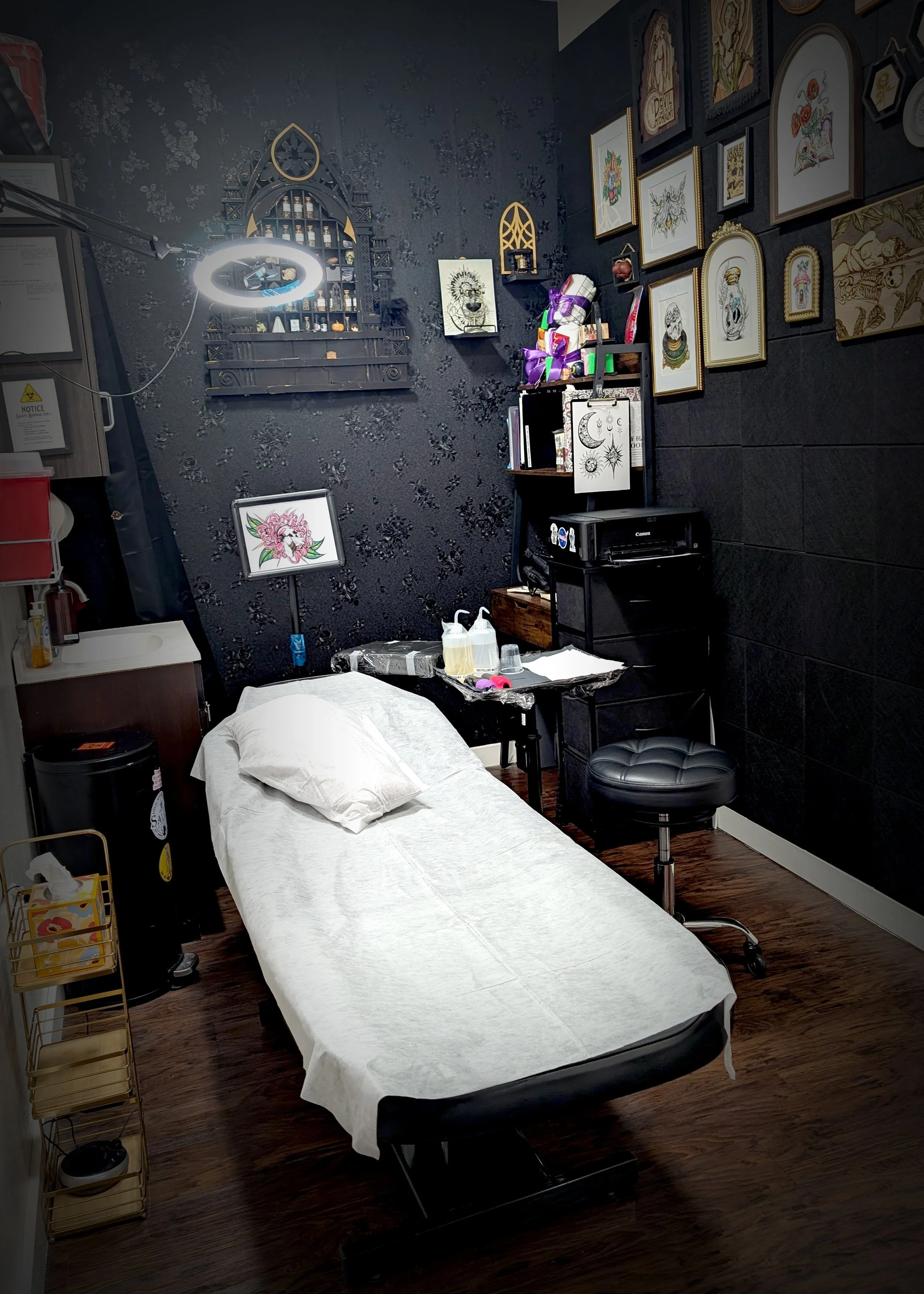
What I've Watched Happen In That Chair
Running this shop has put me in a strange position. I am the one holding the needle, and I am also one of the people this space was built for.
I have spent years watching what happens in that chair. I have watched people cry, laugh, go quiet, come back to their bodies. I have watched people get tattooed over scars they thought they'd have to hide forever. I have watched people mark a diagnosis on their skin the same week they got the diagnosis, like the appointment and the tattoo were part of the same event. I’ve watched myself change as I learn and I’ve passed on information that has changed others’ perspectives. What I’ve concluded is: there’s so much more here than any of us ever expected.
My Own Skin
I have my own experience with Ehlers Danlos syndrome and joint hypermobility, and that overlap with neurodivergence is not a coincidence. A 2022 study published in Frontiers in Psychiatry found that joint hypermobility is linked to neurodivergence, along with dysautonomia and chronic pain. That is the same overlap I live in every day, and it is the same overlap I see across the people I tattoo. During my apprenticeship, I spent a lot of my practice time working on my own skin, because nobody was teaching technique for skin like mine. My skin heals differently. It scars differently. Some of us get histamine reactions near a fresh tattoo, not on it, and almost nobody talks about that. I am growing my knowledge and learning from experts to keep building on what I already know from doing this work on my own body and other people's.
Sources:
There is no real divide between my natural facial flatness and my stretchy scarred skin. What I’m learning, seeing, and connecting (and ultimately wanting to study) is that these behaviors, neurotypes, and body types are not isolated, rather, smaller parts of a larger picture.
The Gap Nobody Has Studied
None of what happens in my chair is an accident, and none of it is separate from who I am. I have started pulling together research on the connection between hypermobility, trauma, sensory regulation, and tattooing. My business partners and I have been mapping this, across things like how autistic focus and attention work, how people relate to their own bodily sensations, how pain and regulation are connected, and how getting a late diagnosis as an adult changes how you understand your own history.
I also dug through a variety of studies provided by BARE, Inc (thank you!) existing studies on tattoos and trauma, tattoos and coping, tattoos and identity, and tattoos as scar coverage. Every single one of them was worth reading. The connection of tattoos and trauma recovery is strong.
However, I’d like to explore something a little further. There’s little to no mention of autism, ADHD, or neurodivergence directly. That absence is the whole reason I’ve been noodling pretty damn hard. There is real research on tattooing as a coping tool and an identity tool for the general population. There is nothing on what changes when the person in the chair has a nervous system that runs differently, and there is nothing on how to do this work well for that person specifically.
I want that gap closed. I am not done building the case yet, and that's exactly what makes this exciting.
Unmasked
I am learning not to soften my face for other people's comfort. This is what unmasked looks like. Flat is not the same as empty. Still is not the same as absent. I am paying attention. I am here. I’m just…..done performing.