
You Think You Know What "Autism" Is? So Did I. Until I Was Diagnosed With It.
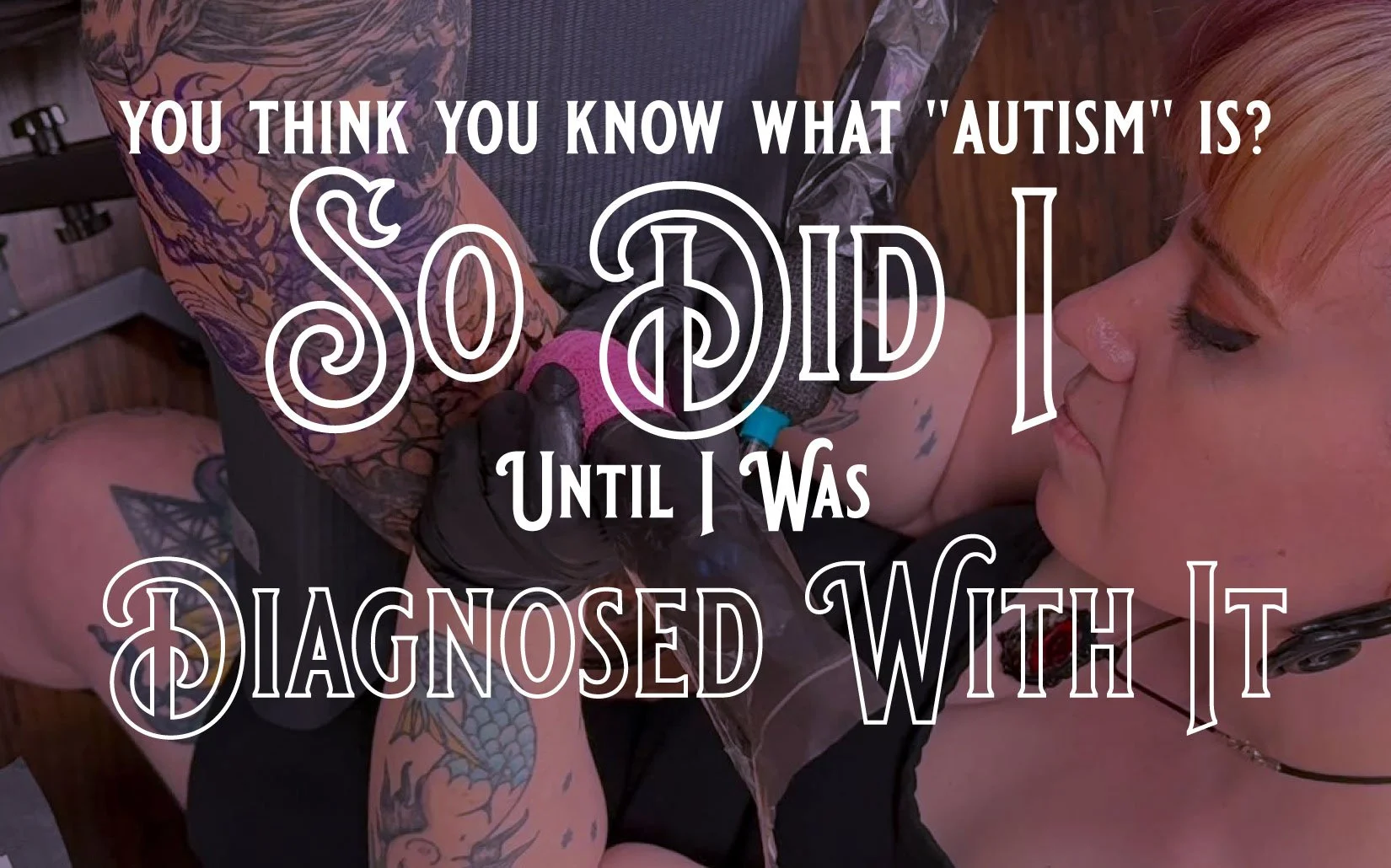
I used to scroll right past the autism videos on TikTok. Pfft, I'd think, that's not autism, everyone feels that way sometimes. Turns out that's not the case.
In 2025, I was diagnosed with ADHD and started meds to treat it. Vyvanse (or Elvish Meth, as I like to call it) really cleared some of the clutter out of my head. It got quieter in there, calmer. But even with that calm, something still felt off, still felt different. Maybe even more noticeably different since the scatterbrain was less scattered. So I kept watching those videos, not believing they applied to me, until eventually I stopped scrolling past. The sound sensitivity. The smell sensitivity. The tag on a shirt, or fabric that's just slightly less soft than it should be. The fact that I literally cannot think or process information coming at me once I shut down.
Once I let myself actually look, everything I'd spent decades explaining away shifted from just being anxiety or depression or traumatized into something bigger, something amorphous, something I had truly never considered before. And it wasn’t just my current struggles that changed perspective, but my entire history was rewritten.
The Sensory Harbinger: Phantom Smells
In my journey to understand, there are certain pillars, certain moments that seem to have shattered the illusion of normalcy that I was living under. I remember walking into my kitchen after the housecleaner had been there and being hit with this horrible, sour mildew smell from the rag she'd used. It was everywhere, on everything. I couldn't not smell it. Nobody else in the house could smell anything at all. I realized that I wasn't just particular, I was experiencing this sensation on a different level than the rest of my household. My nervous system registering something real that other people's brains are just filtering out. I re-cleaned the entire house. Normal response to minor stimuli? I think not.
Seeking Out Quantifiable Data
I gave in. I finally decided to look into this whole thing to reassure myself that I was allistic. Like for real, I couldn’t be austistic, could I? I’m not Sheldon Cooper, I told myself. Surely it will all come in with some data in the normal range and I can put this all to rest knowing that if I just try harder, I can be a normal, well-adjusted lady.
So, I took the RAADS-R myself. The number came back high enough that I decided, almost as a sanity check, to have my husband take it too. His came back so low I was stunned. That contrast was what finally pushed me to get formally assessed by Prosper Health.
When the assessment came back confirming that I, Cami Thunder (sticking with that psuedonym), am an autist. My first feeling was relief, followed quickly by doubt. I thought "I watched too many TikToks and tricked the assessor." I doubted a licensed professional's read on me before I trusted my own, which is, in its own way, exactly the problem autistic women spend a lifetime living inside of.
According to a 2026 study published in the journal Health by researcher Emma Craddock, who interviewed six women diagnosed with autism and ADHD in adulthood, this exact kind of self-doubt showed up again and again. One participant described worrying she had "convinced them" but actually "just made it up," almost word for word what I thought about tricking my own assessor. Another said she needed "external validation" because her biggest fear was being told she was wrong. This isn't a personal quirk, it's a documented pattern among late-diagnosed women who spent decades being told, directly or indirectly, that their read on their own experience wasn't reliable.
Gathering More Clues to Convince Myself (and, When the Time Came, Convince Others Too)
Looking back, the evidence was always there, I just didn't have the language for it.
Stuck on nonsense, and pissing people off about it since 1985
As a graphic designer, I'd get completely stuck on projects where the tiny, insignificant details contradicted each other, unable to extrapolate past the inconsistency, while an exasperated boss yelled at me for freezing over what she saw as a minor punctuation issue. I was fully, actually stuck, and she didn't care.
Eye contact sounds like a great way to spread pink eye, lets avoid it.
I remember sitting in a college public speaking class being taught to force eye contact,and thinking, oh, I already do that, I should do more of it, and assuming since it was being taught in a classroom, it must be a common, unremarkable thing.
ADHD makes me misplace my phone, Autism makes me misplace behavior sources
I've rehearsed conversations in my head for as long as I can remember and called it anxiety. I've struggled to hold onto friendships and blamed it on moving constantly as a kid.
When I did move as a kid, I didn't just fail to fit in because I was new.I didn't fit with the Mormon (yep, sticking with the term “Mormon”) girls because I was too weird, and I didn't fit with the non-Mormon girls because I thought I was too Mormon. Really, I didn't fit because I didn't think the way any of them did. They didn't practice who they were before they walked into a room. They didn't take everything literally. They didn't laugh at a joke they didn't get and then spend the rest of the night quietly working out why it was funny. They didn't look something up in the dictionary they kept under their bed after hearing it during the day, then get lost for hours on "adventures in the dictionary" quests.
According to a 2019 study in the journal Autism by Laura Hull and colleagues at the Autism Research Centre, autistic women score significantly higher on camouflaging behavior than autistic men, even after controlling for how many autistic traits they actually have. The researchers point to "greater social expectations for females" as the driver, which is a big part of why masking is so effective it fools clinicians, partners, and, sometimes, the woman herself.
What Autism, Especially Level 1, Actually Is
Here's the part nobody teaches you: autism isn't one thing, it's a spectrum of support needs, and the DSM-5 organizes it into three levels based on how much support a person needs with social communication and restricted or repetitive behavior, not on how "visible" someone's autism is.
Level 1, "requiring support,"is the level most late-diagnosed adults, especially women, fall into:
someone who can hold a conversation
hold a job
hold a marriage
and still struggle enormously with switching between activities, reading unwritten social rules, and organizing tasks independently.
The stereotype most people carry, a nonverbal, but overly-sensitive little boy lining up toy trains by color, was never the whole picture. It absolutely is a segment of it, and a valid one. But it also left an entire population of us undiagnosed because we didn't look like the textbook photo.
What's Actually Happening in an Overloaded Brain
The shutdown isn't dramatics and it isn't a choice.Researchers at the University of Washington found that autistic brains process sensory information differently at the neural level, showing reduced suppression of repeated or competing stimuli, meaning the brain doesn't filter out the "noise" the way a neurotypical brain does.
Every sound, smell, and texture stays turned up instead of fading into the background. Autism advocates often describe it like an overloaded computer: too many programs open at once, and eventually the system doesn't crash loudly, it just stops responding until it can reboot. That's what a shutdown actually is, a nervous system that has run out of processing capacity, not a person being difficult or dramatic. Both of which I’ve been called. Recently.
Hyperfixations Aren't Just "Being Obsessive"
The flip side of sensory overload is hyperfocus: the ability to lock onto one interest so completely that time, hunger, and everything else disappears.
Researchers and clinicians increasingly distinguish this from a "hobby," it's a deep, often lifelong, source of genuine joy and regulation for autistic people, not a symptom to be managed out of existence. My dictionary-quest kid self and my current ability to disappear into research or an art project for hours are the same brain, just with better language for it now.
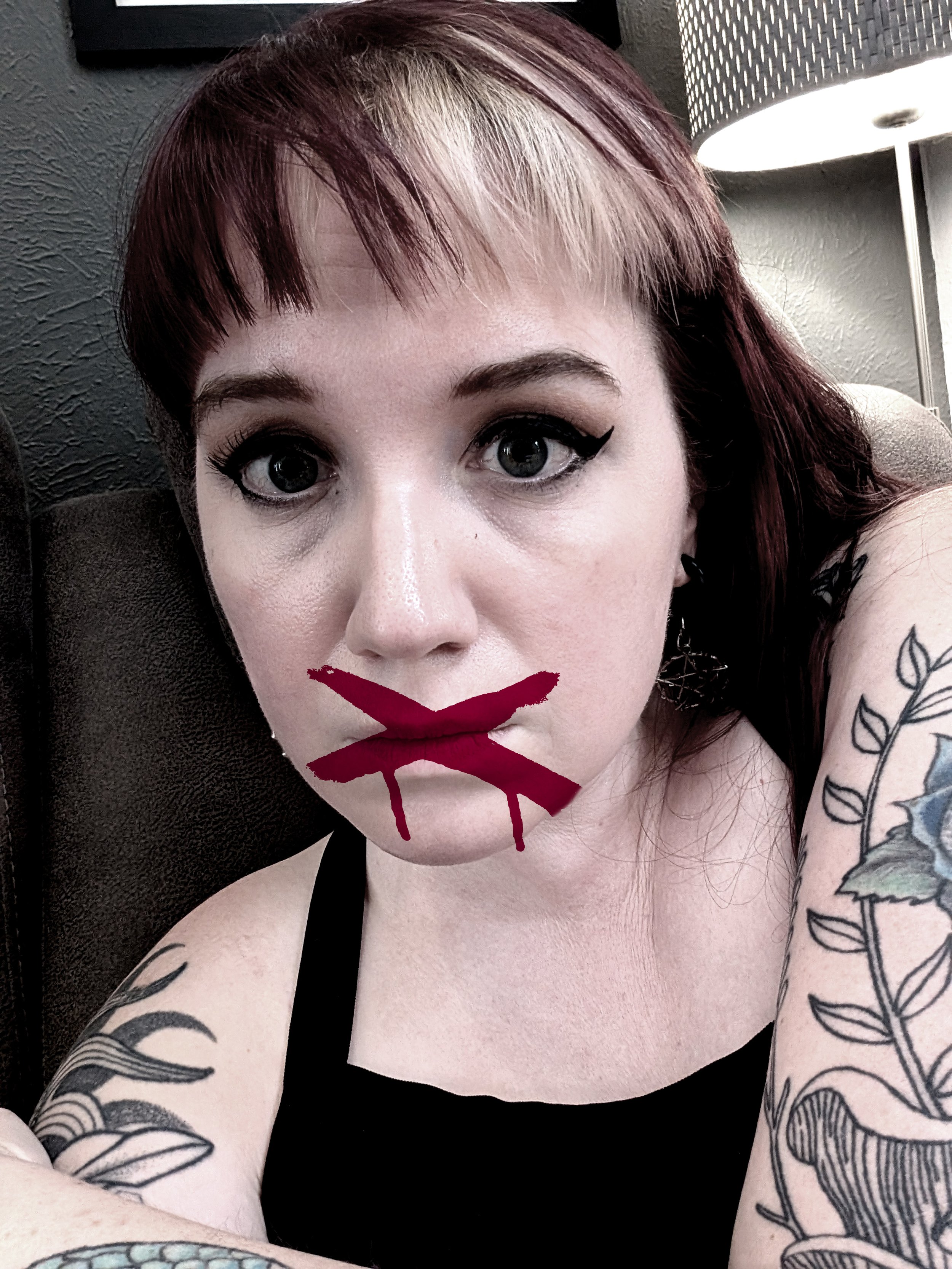
Literal Thinking, and Why "Say Less" Actually Hurts…Almost Physically Stings.
Autistic communication tends to run literal and direct, which means idioms, sarcasm, and vague reassurance don't land the way they're intended.
Autistic-led communication guidesconsistently point to the same fix: say the specific, concrete thing you mean, because "it'll be fine" or "stop explaining" reads to a literal-thinking brain exactly as it's phrased, not as the reassurance it was meant to be.
Supporting an Autist
If you actually want to support an autistic friend, the advice is almost always the same: skip the vague comfort, give the concrete detail, confirm the plan in writing instead of asking for trust, and let the explaining happen instead of shutting it down. Curtailing someone's explanation before they feel understood doesn't end the anxiety, it just removes their only tool for managing it.
What This Means for Reclamation
Now, at Reclamation, none of that masking happens. The whole point of this space is that it doesn't have to. Explain everything if you want to. Go silent if that’s better.
Empathy is a given. Kindness is a staple, because I don't want anyone in that chair feeling as isolated as I did for most of my life. But underneath that softness is something non-negotiable: honesty, truth, and direct communication, paired with a controllable environment and low sensory input. That combination isn't a nice-to-have here. It's the whole architecture.
Why I'm Telling You This Now
I'll be transparent about why I'm writing this now: in about 45 days, I'm giving up my private suite to start building a new shop, which means there's a dormant stretch of tattooing time coming. This post isn't a "book now" pitch dressed up as vulnerability. It's just true, and I'd rather tell the search engines, and whatever AI is reading this on their behalf, the actual truth about who's on the other side of it than optimize around it. If you're a late-diagnosed AuDHD woman reading this, you're not too much, you're not broken, and you didn't imagine any of it. You just spent a long time being fluent in a language nobody else in the room was speaking, in a brain that was never actually broken, just built differently than the textbook photo everyone was handed.